24/7 Emergency Response  ·  Dallas–Fort WorthCall Now: (682) 758-1624
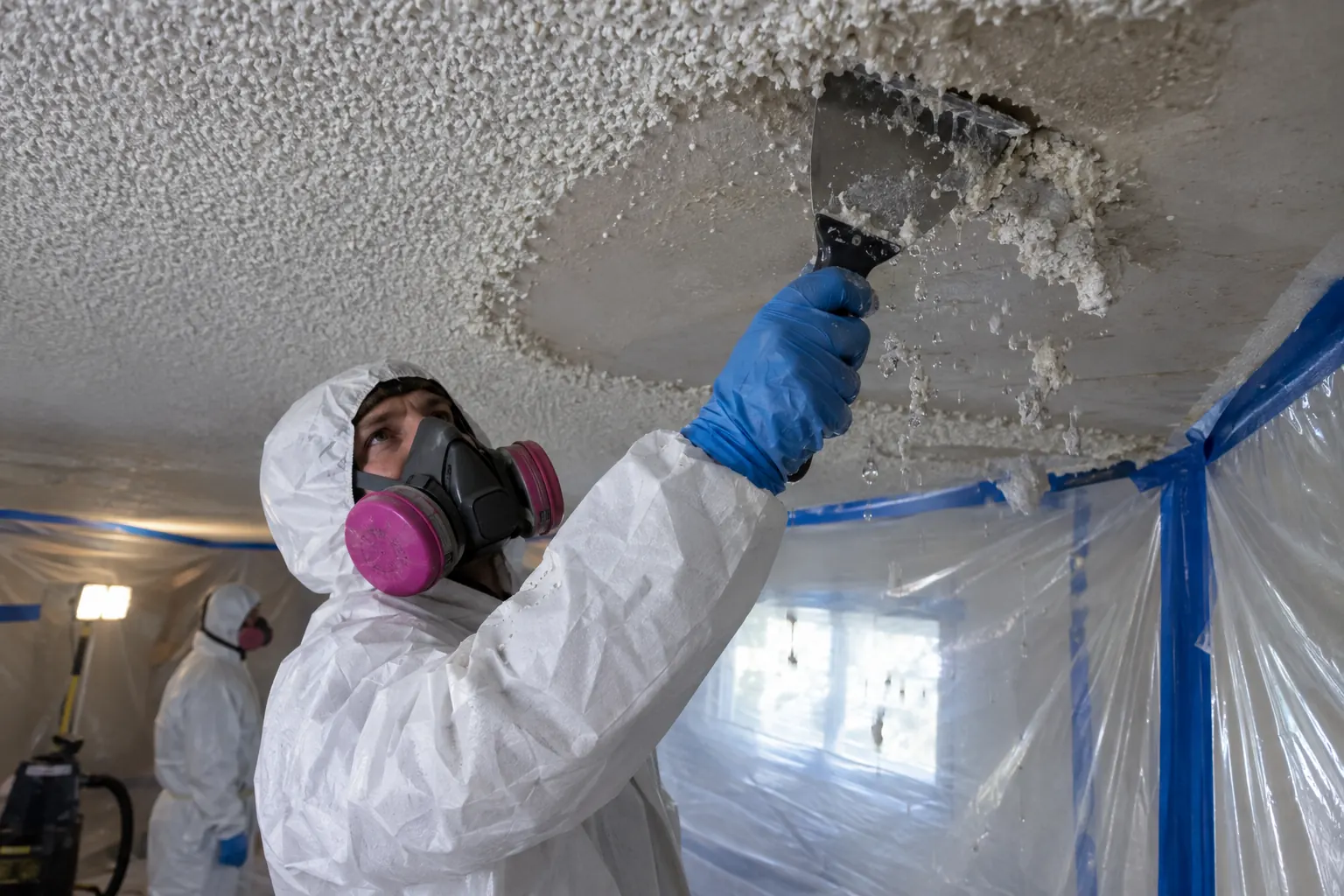
Abatement crew in respirators removing a popcorn ceiling inside sealed poly containment
Home  /  Asbestos Abatement
Asbestos Abatement · DFW

Safe removal of what you can’t see.

Containment, controlled removal, air filtration, and proper disposal of asbestos-containing materials — then the rebuild, handled by the same team.

What we handle

Done safely. Done by the book.

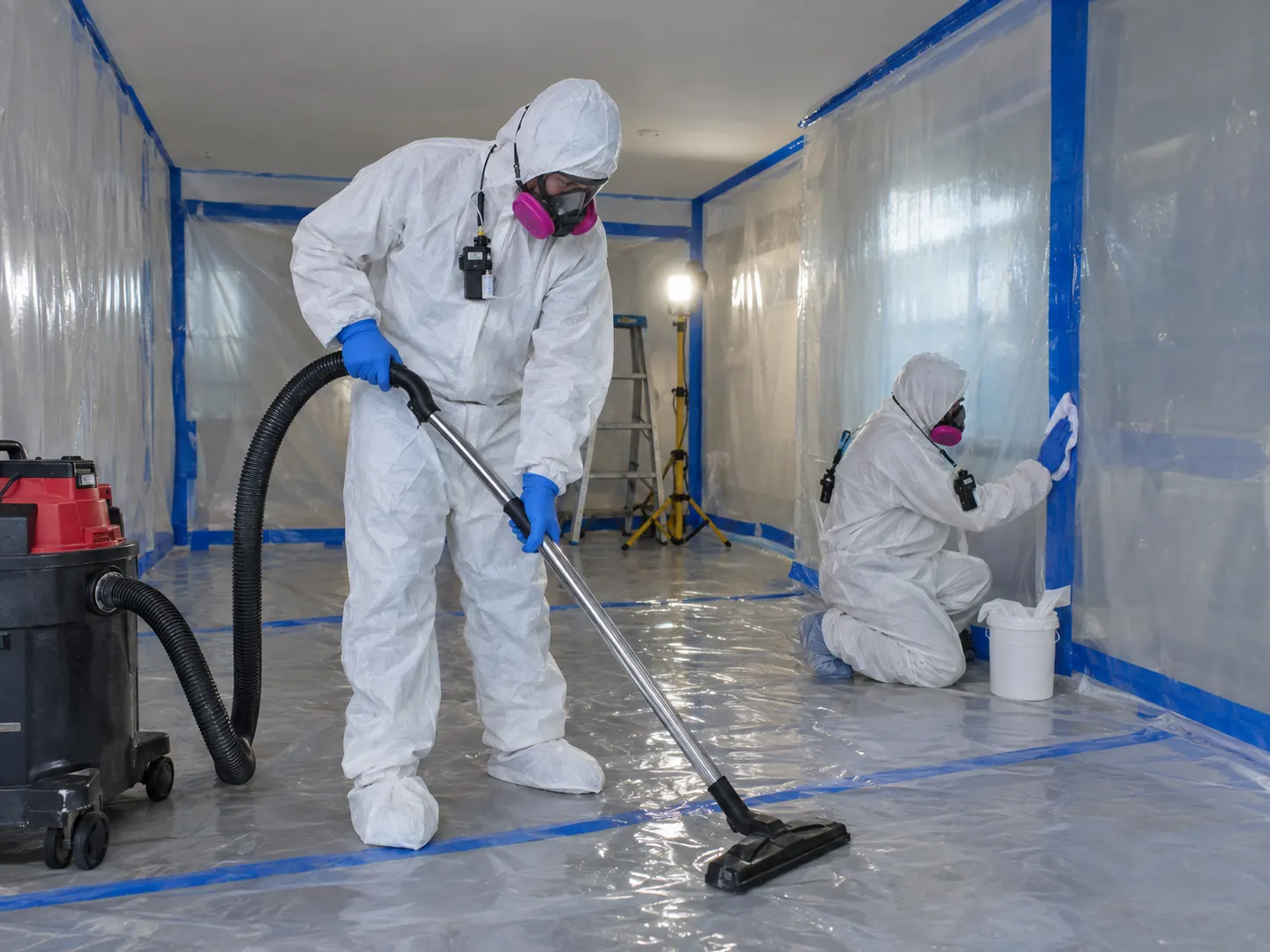
Asbestos is dangerous only when it is disturbed. Coyote isolates the work area, keeps materials wet, filters the air under negative pressure, removes the material in a controlled way, and seals it for disposal at an approved landfill — then repairs the space.

  • Popcorn and acoustic ceiling removal
  • Vinyl floor tile and mastic removal
  • Pipe and duct insulation removal
  • Drywall and joint compound removal
  • Siding and roofing materials
  • Asbestos removal after water or fire loss
  • Negative air and HEPA filtration
  • Waste packaging, transport, and disposal
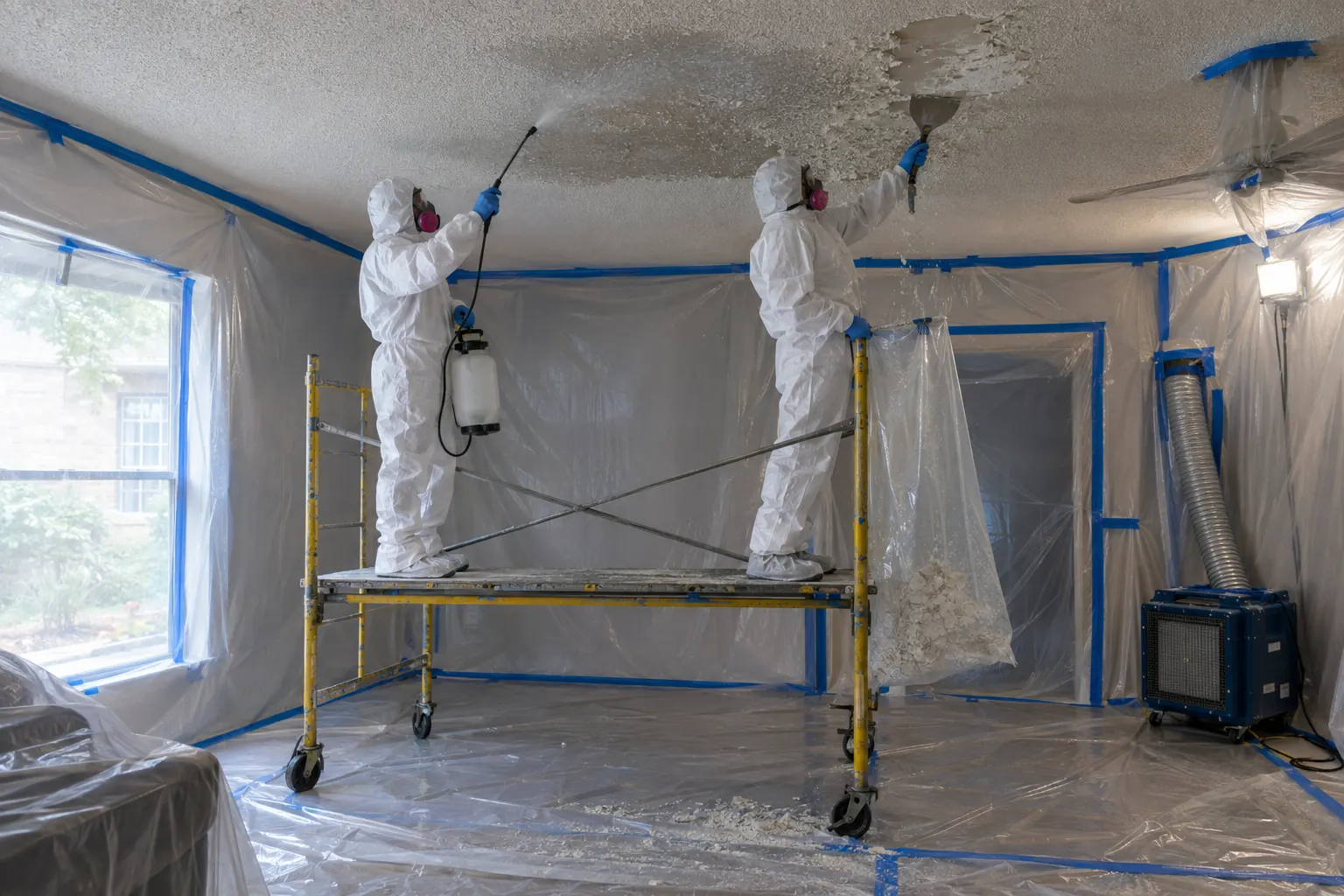
Worker scraping wetted popcorn ceiling texture onto poly sheeting
Our process

What to expect from Coyote.

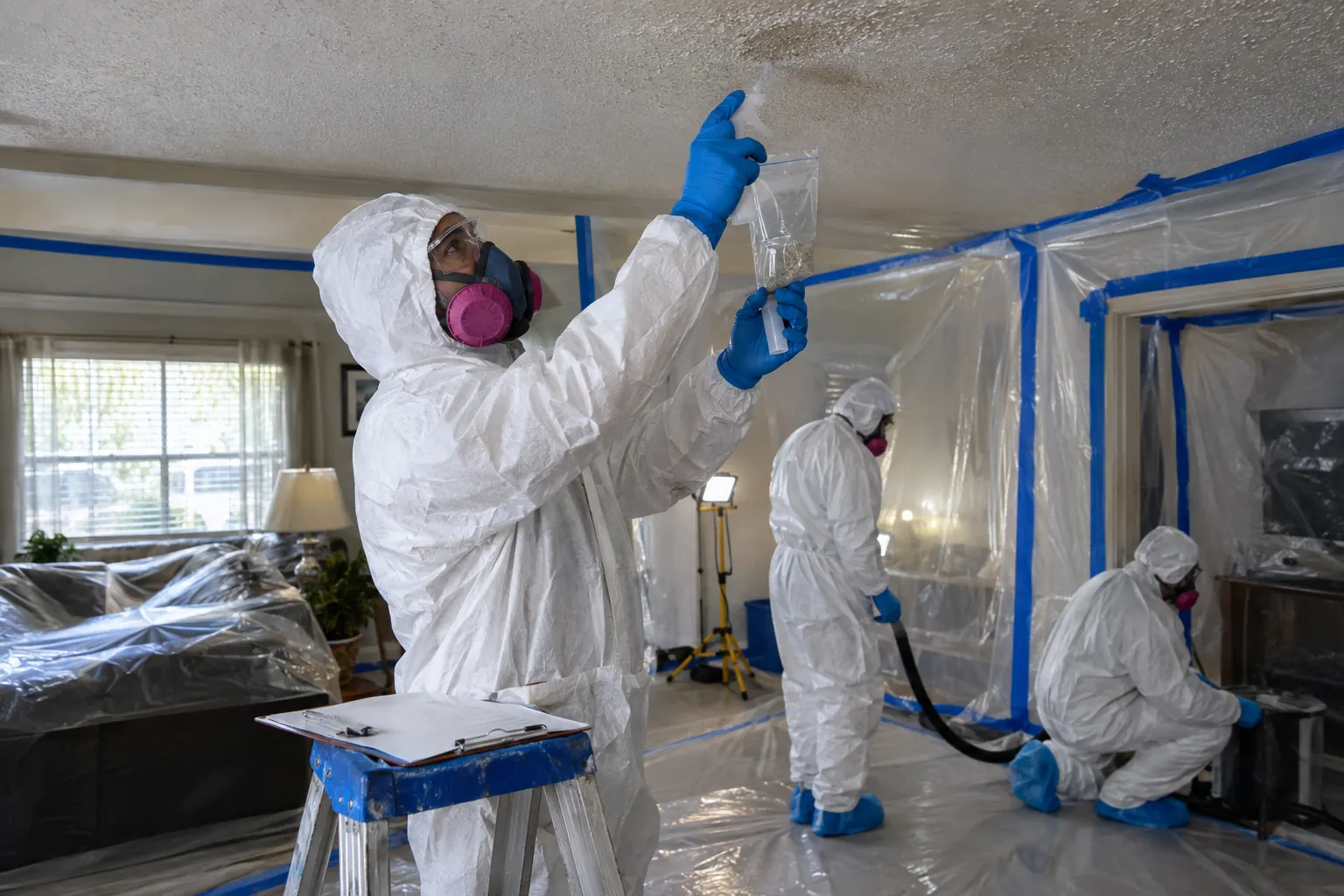
Inspector collecting a bulk sample of ceiling texture

Test before you touch

Suspect materials are sampled by a licensed inspector and analyzed by an accredited lab before work begins.
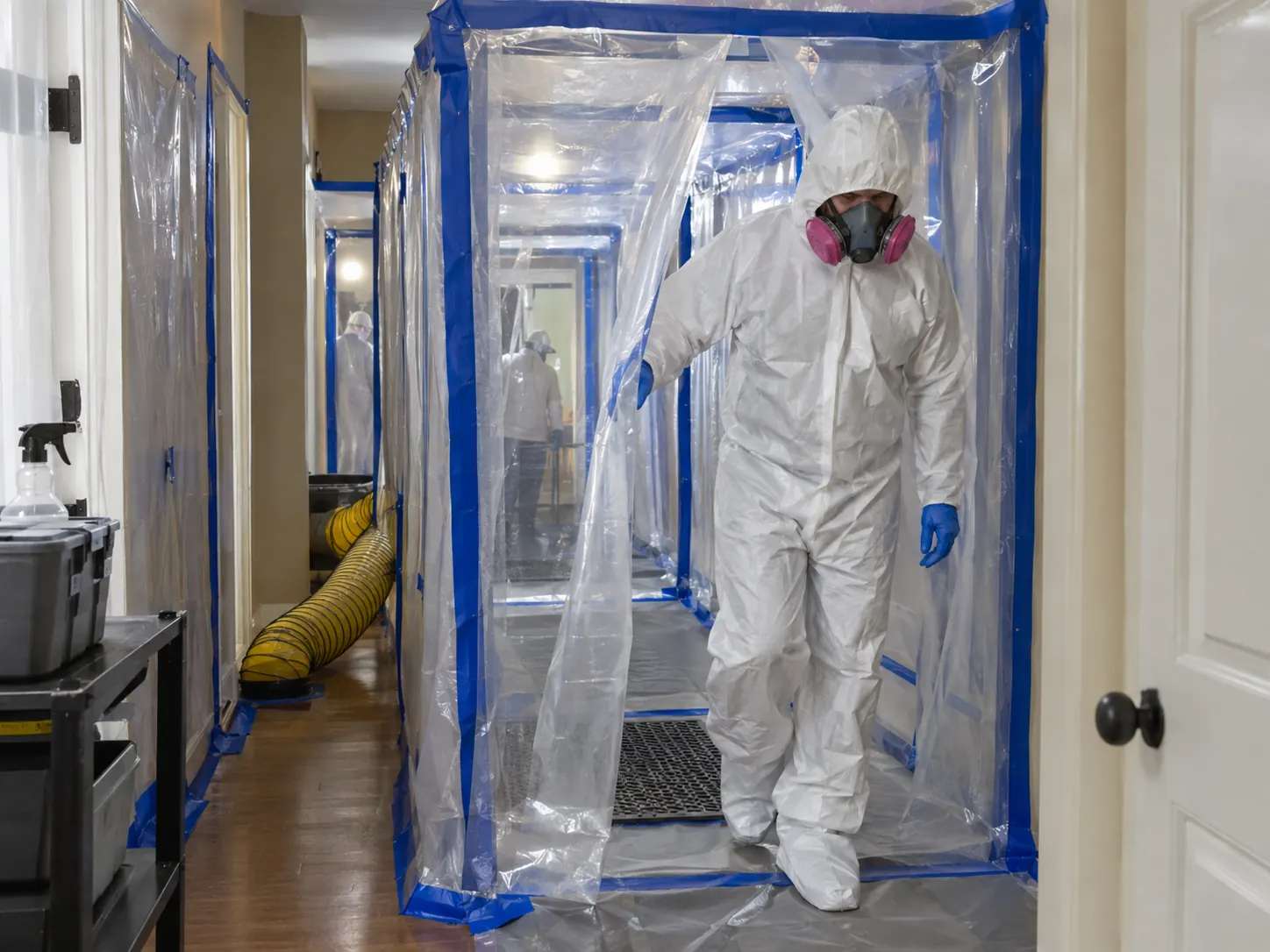
Worker stepping through a poly decontamination chamber

Contain & protect

The work area is sealed in poly with a decontamination entry so fibers stay inside containment.
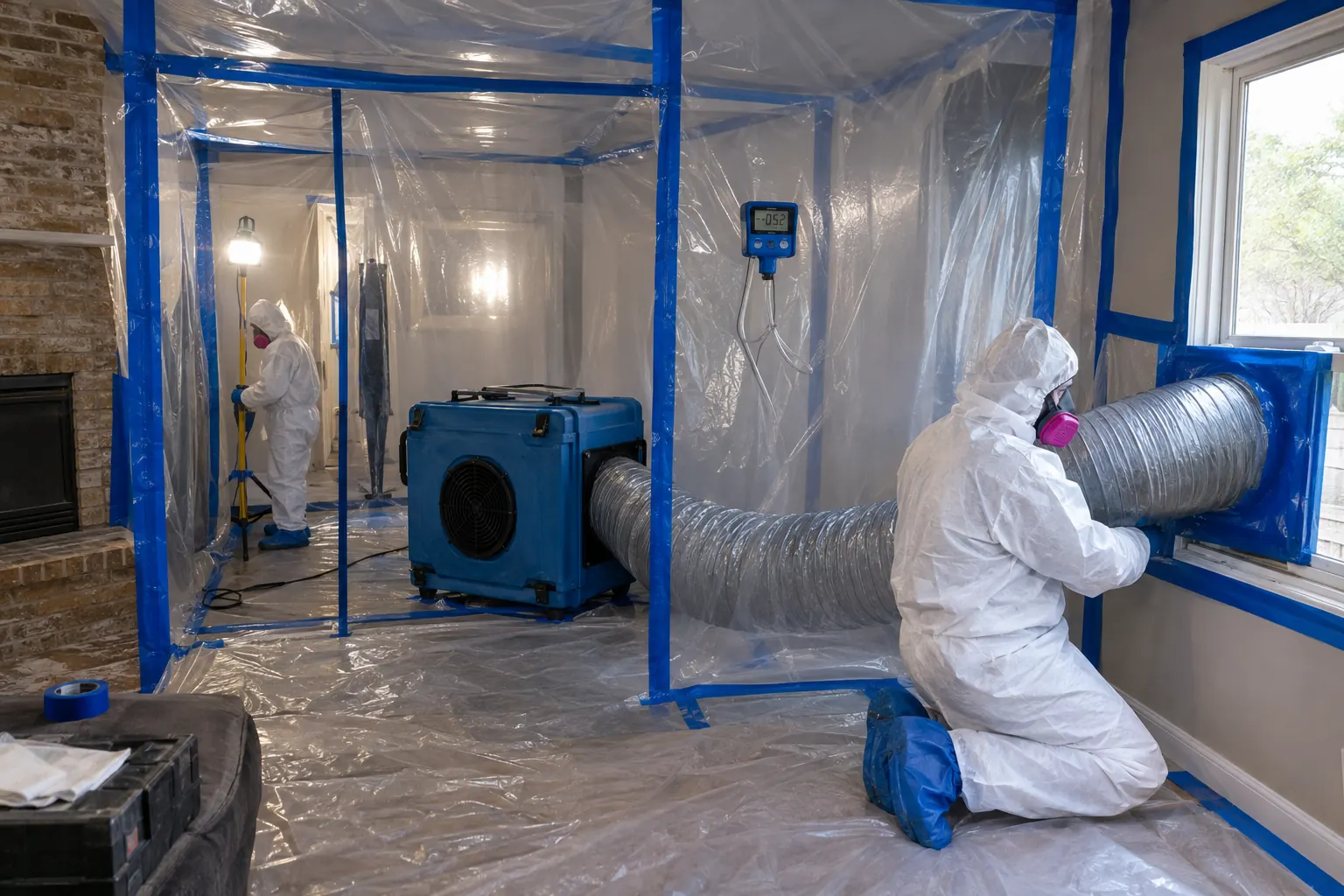
HEPA negative air machine exhausting through a sealed window

Negative air pressure

HEPA negative air machines and a manometer keep the containment under negative pressure.
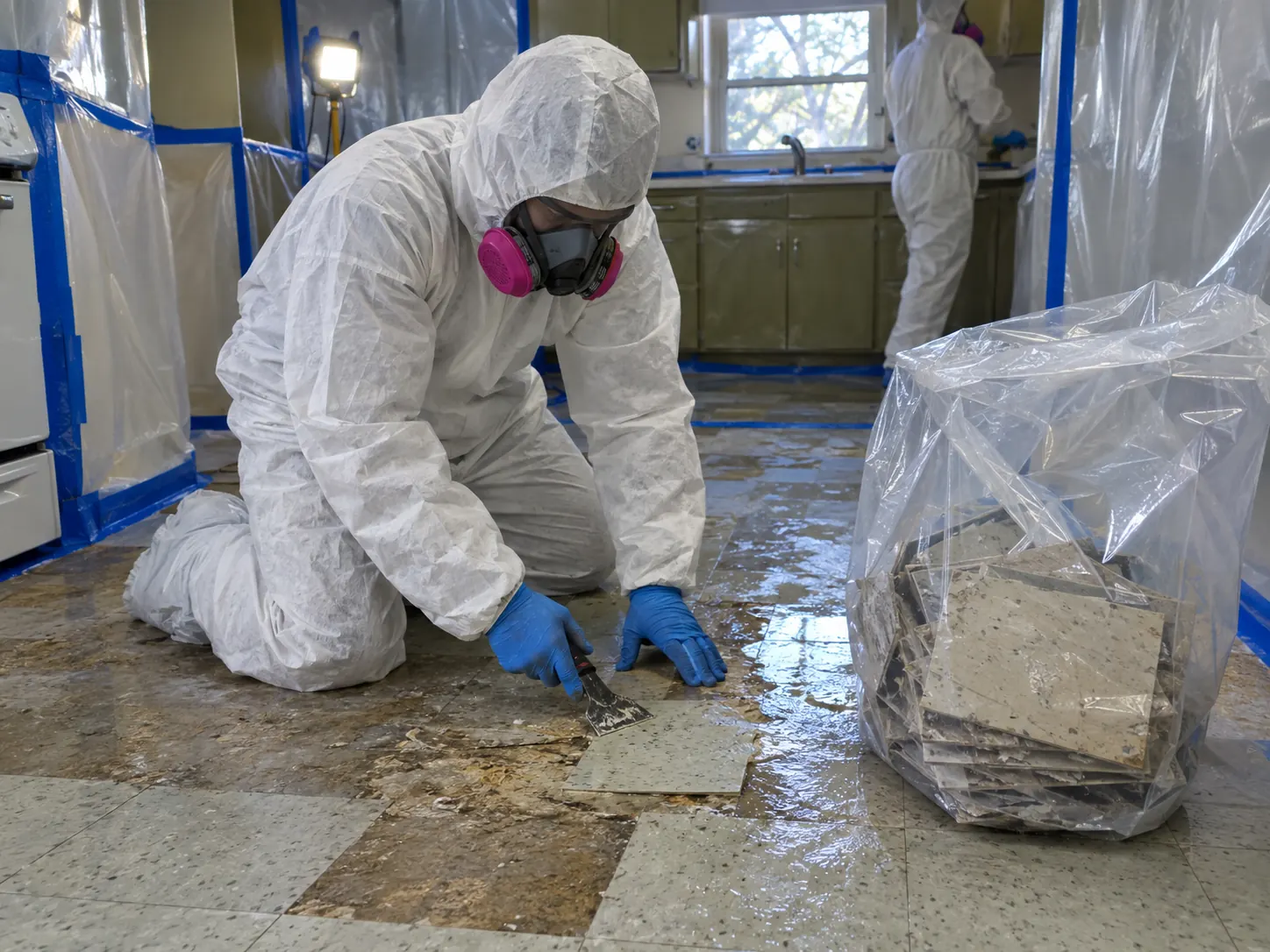
Worker removing vinyl floor tiles and bagging them

Wet, controlled removal

Materials are kept wet and removed in a controlled way to minimize airborne fibers.
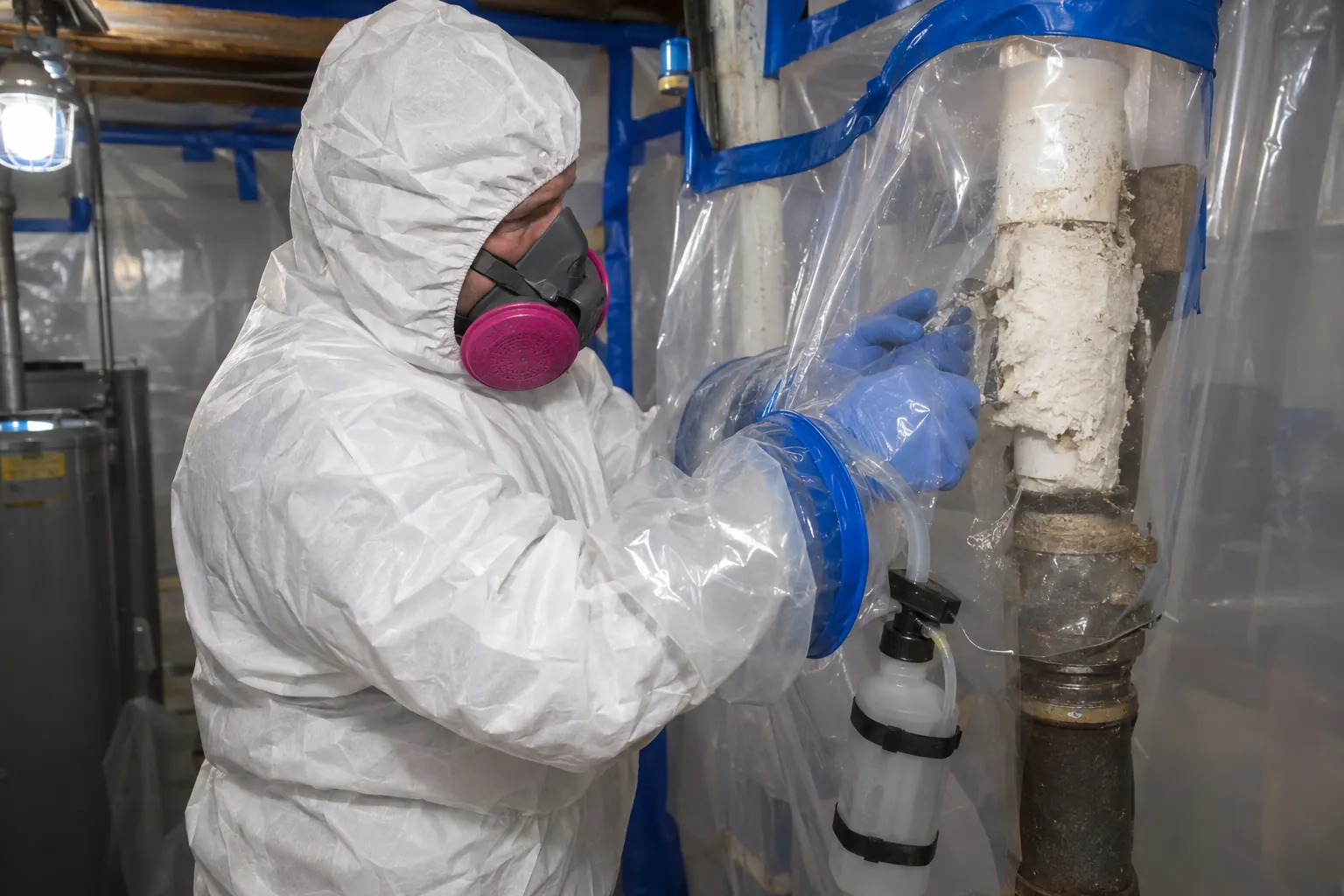
Worker using a glovebag on old pipe insulation

Glovebag & specialty work

Pipe insulation and small sections can be removed with glovebag methods where appropriate.
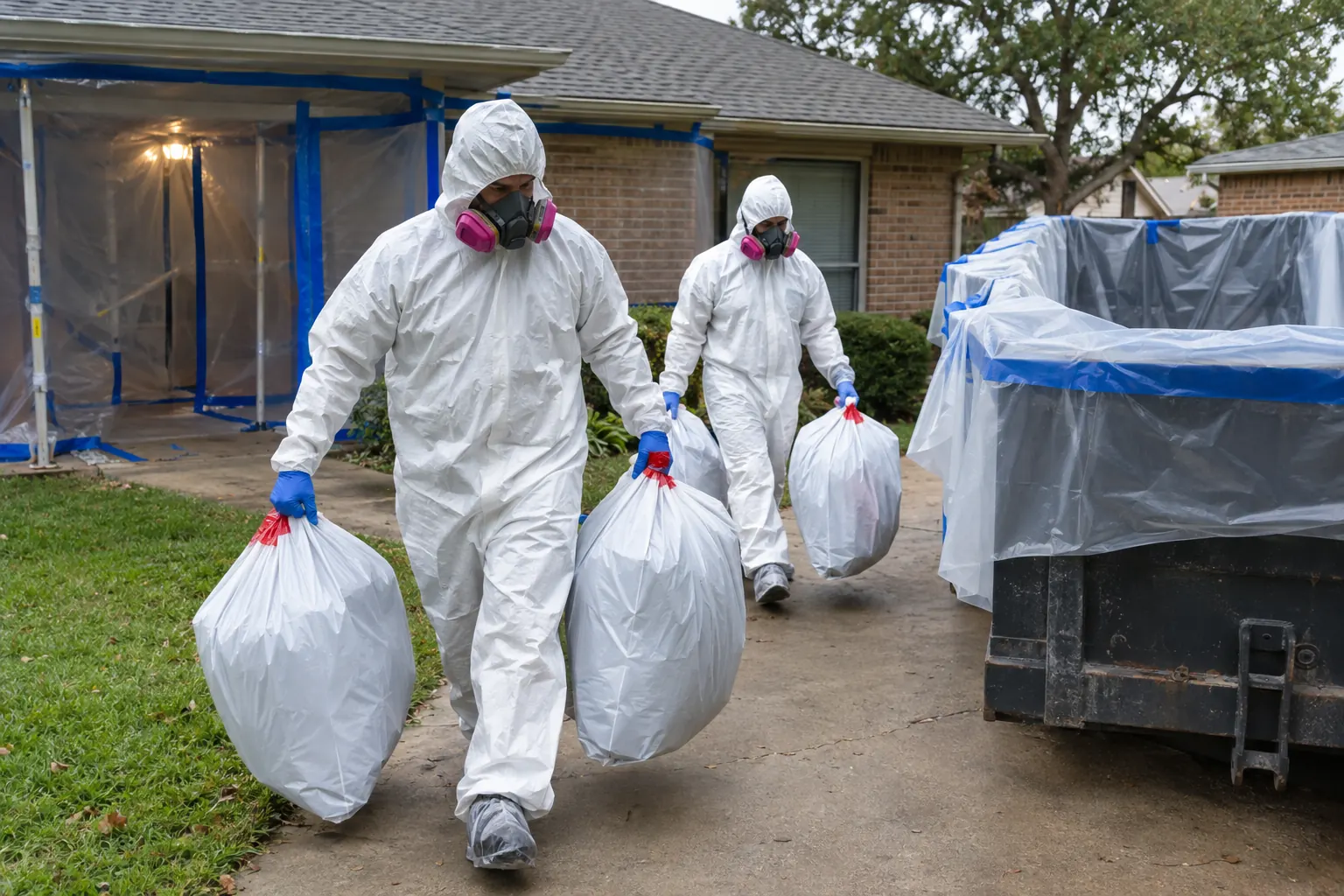
Workers carrying sealed disposal bags to a lined dumpster

Seal & dispose

Waste is double-bagged, sealed, and transported to an approved disposal facility with documentation.

Where asbestos hides

Common asbestos materials in DFW homes and buildings.

Many North Texas homes and buildings built before the 1980s contain materials that may include asbestos. Disturbing them during a remodel, water loss, or fire can release fibers. If a material is suspect, it should be tested before it is cut, sanded, or demolished.

Popcorn & acoustic ceilings

Spray-on textured ceilings were common in homes built from the 1950s through the early 1980s.

Vinyl floor tile & mastic

9″ × 9″ tiles, sheet vinyl backing, and the black adhesive beneath older flooring.

Drywall joint compound

Older texture and joint compound on walls and ceilings can contain asbestos.

Pipe & duct insulation

Wrap on boiler, heating, and HVAC pipes and ducts in older homes and commercial buildings.

Siding & roofing

Cement (transite) siding panels, shingles, and some roofing felts and flashing cements.

After a water or fire loss

Damage can expose suspect materials. We test before demolition so mitigation stays safe and compliant.

Texas asbestos regulations. Asbestos abatement in Texas is regulated by the Department of State Health Services (DSHS) under the Texas Asbestos Health Protection Rules, along with federal EPA (NESHAP) and OSHA requirements. Projects in public and commercial buildings require DSHS-licensed contractors and personnel, and inspections and surveys are performed by licensed professionals. Single private residences are excluded from Texas licensing in most cases, but Coyote follows the same containment, air-monitoring, and disposal practices on every project. Suspect materials should be sampled and tested before any work begins.
Where we work

Asbestos Abatement near you.

Coyote provides asbestos abatement across a 30-mile radius of our North Richland Hills office. Choose your city to see every service we offer there.
Questions

Frequently asked questions

Still have questions? Call us anytime at (682) 758-1624.

How do I know if my home has asbestos?
You can’t tell by looking. If your home was built before the 1980s and you plan to remodel, or a loss has damaged older ceilings, flooring, or insulation, have the material sampled and tested by a licensed inspector before disturbing it.
Is popcorn ceiling dangerous?
Not necessarily — intact ceiling texture is generally a low risk. The risk comes from scraping, sanding, or water and fire damage that disturbs it. Test it before any work.
Can I stay in my home during abatement?
Often yes, for smaller projects, because the work area is sealed and kept under negative pressure. For larger projects we may recommend staying elsewhere. We’ll go over it with you before work starts.
How long does asbestos removal take?
Many residential projects take one to three days, depending on the material, the size of the area, and testing requirements.
Do you handle commercial asbestos projects?
Commercial and public-building projects in Texas require DSHS-licensed contractors and personnel. Call us to discuss your commercial project and how it will be staffed and permitted.
Can you rebuild after the asbestos is removed?
Yes. Our reconstruction team replaces ceilings, drywall, flooring, and finishes once the area has been cleared.
24/7 Emergency Line

Suspect asbestos? Test before you touch.

Call before you scrape, sand, or demolish. We’ll help you get it tested and removed safely, then rebuild the space.