
Water lines are an essential plumbing component in any home. Over time, these pipes can break due to corrosion, shifting soil, or freezing temperatures. They can also develop fractures and eventually burst without warning.
Knowing how to identify the problem early can help minimize damage and get your home back to normal as quickly as possible. So how can you tell if you are dealing with an underground pipe burst in the first place?
How To Tell if a Pipe Burst Underground: 7 Signs To Look For
Identifying a burst pipe underground can be tricky, especially since the damage is hidden beneath the surface. The good news is that while most of your plumbing is tucked away, these warning signs can help you determine whether you have a water pipe burst under your home in North Richland Hills, TX or anywhere in the Dallas-Fort Worth area.
1. Unusually High Water Bill
A sudden, unexplained spike in your water bill without any significant changes in usage is one of the most common signs of an underground pipe issue.
If you are not consuming more water than usual, checking your water meter monthly can help you catch unusual usage early. If the numbers are fluctuating drastically, it may be time to consult a professional restoration team.
2. Low Water Pressure
Noticeable water pressure drops are another possible sign that an underground pipe has burst on your property. If your water provider has not announced any pressure changes in your area, a damaged underground line could be to blame.
Try letting your shower run for a minute and then flush the toilet. If the shower flow slows down or stops, there is likely a pressure issue caused by a broken pipe somewhere in the system.
3. Murky or Discolored Water
Water flowing from your faucets should always be clear. If you notice murky or discolored water coming out, it may be the result of a water pipe burst beneath your home. Breaks in underground lines allow soil and debris to enter your water supply, leading to visible discoloration at the tap.
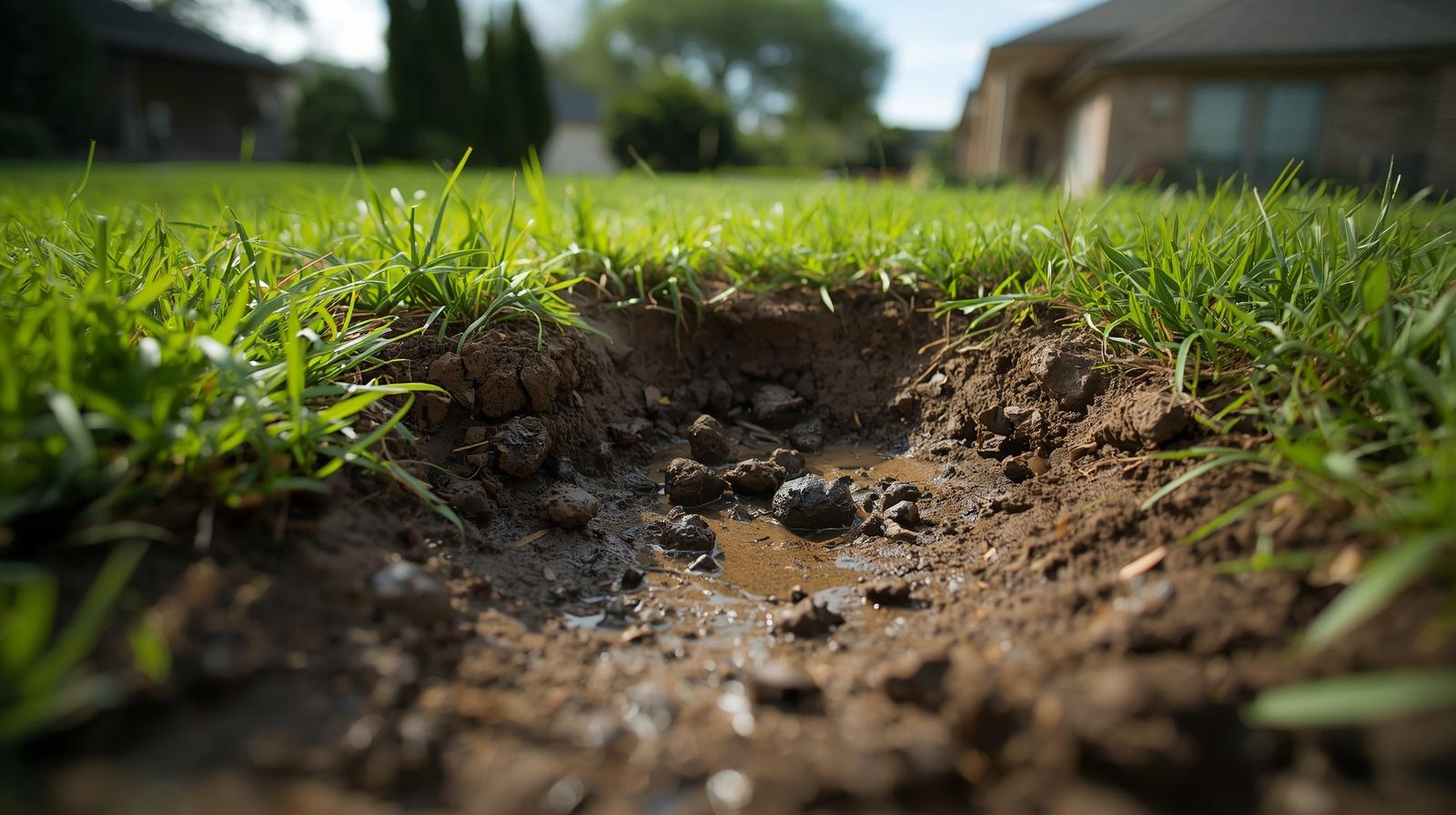
4. Sinkholes or Depressions in Your Yard
Your yard can reveal a lot about the condition of your underground pipes. Sinkholes or depressions forming in the ground often signal that a leak is actively eroding the soil below the surface.
Water pooling in specific areas of your yard is another red flag, especially when there has been no recent rainfall or irrigation. If the soil remains constantly saturated, an underground water line is likely leaking.
5. Unusually Lush Patches of Grass
A green lawn is typically a good thing, but patches of grass growing noticeably faster than the rest of your yard can be a warning sign. If one section appears far lusher and healthier than the surrounding area, it may be receiving an unintended boost from water leaking out of a buried pipe below.
6. Unpleasant Odors
The smell of sewage or standing water in or around your home can be another tell-tale sign of a pipe problem underground. A properly functioning plumbing system directs wastewater away from the house. When an underground pipe bursts, it can interfere with that process and allow foul odors to linger inside or outside your home.
7. Mold on Walls, Ceilings, or Floors
Mold grows quickly wherever there is excess moisture. If you start noticing mold in unexpected places like walls, ceilings, or floors, a hidden leak may be the cause. A burst pipe can saturate materials behind walls or under flooring, creating ideal conditions for mold to spread fast.
Even if you cannot see visible mold growth yet, persistent musty odors inside your home are reason enough to take action and have the area inspected.
Ways To Test if You Have a Water Leak
Besides watching for the signs above, you can also do a quick check for an underground leak yourself before calling a professional.
Start by turning off all water fixtures inside your home, including your water heater and any irrigation systems. Then head outside and check your water meter.
If you have a digital meter, look for a flashing number on the flow screen. Any number above zero indicates water is still moving through the system.
For an analog meter, watch for movement in the small red triangle or silver wheel. If either is spinning while everything inside is turned off, water is flowing somewhere it should not be.
To narrow down whether the leak is inside or outside the house, follow these steps:
Locate your home’s main water shutoff valve, which is typically found in the garage, basement, or on an exterior wall. Turn it off to cut the water supply to the house entirely. Check the water meter again. If it stops moving, the leak is inside the home. If it keeps moving, the problem is likely between the house and the meter, which points to an underground line issue.
Get Professional Help for Your Water Emergency
Knowing how to tell if a pipe burst underground can protect your home from extensive damage and costly repairs. Catching the problem early and acting fast helps you limit the impact and avoid severe water damage to your property.
Whether you are dealing with a burst water line in your yard, unexplained flooding, or mold growth from a hidden leak, Coyote Restoration is ready to help. We serve homeowners in North Richland Hills, TX and throughout the surrounding areas including Fort Worth, Arlington, Euless, Watauga, Haltom City, Richland Hills, Highland Village, Colleyville, and the greater Dallas-Fort Worth Metro.
Our team is available day and night to respond fast and restore your home with care. Contact us today or visit our Google Business Profile to learn more about our water, mold, and sewage restoration services.